
Using Proxies for SEO: Rank Tracking and SERP Checks Without Fooling Yourself
You check your site on your own phone, and it sits at position 6. A friend in another country searches the same words, and it is nowhere on page one. Both of you are telling the truth. Search results change by location, device, language, and time, so a check from your own connection is only one city's answer.
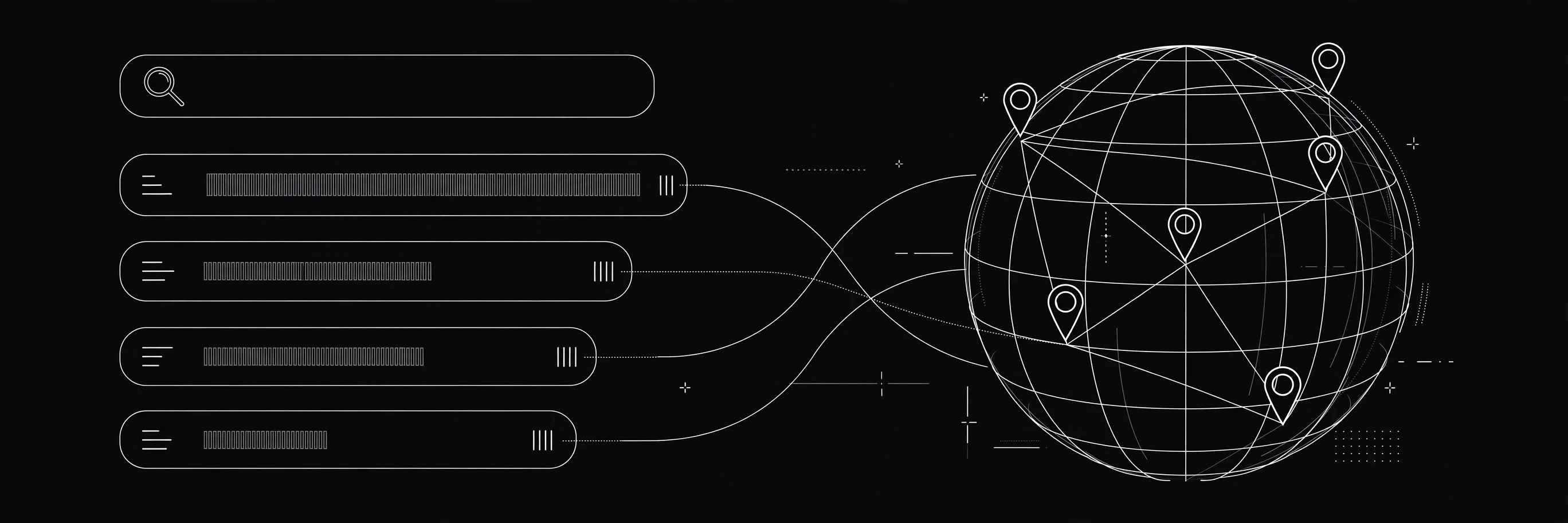
Why one rank check tells you almost nothing
I used to check a ranking from my own browser, write the number down, and wonder why someone else saw something different the next day. The number was not wrong. It was just narrow: one person, in one place, on one device, at one moment.
Google mixes several signals into that page: your IP points to a rough location, your language and device change which results fit, ads and a map pack can push the first organic result down the screen, and a signed-in account adds your history. Change any one, and the order can change.
What a proxy changes, and what it does not
A proxy changes the IP address a search engine sees. Pick a proxy listed in the United States, and your request arrives from a US address. Pick one from Germany, and it arrives from a German address. That shift is often enough to change the local results and the country slant of the page.
It does not change everything. A proxy does not sign you out, clear your history, or set your language, and it does not give street-level precision. A country label tells you the country, not the exact city. A guide on free proxies for local checks makes the same point: a country label alone does not prove city-level accuracy, so verify the location instead of trusting the label. See Ranktracker's guide to free proxies for local SERP checks.

Prefer watching? This short explainer walks through why SEO work needs proxies, including geo-targeting and local results.
Do a manual SERP check with a free proxy, step by step
This takes about ten minutes for one keyword and two locations. Do not change the rules halfway through, or your two numbers will not be comparable.
Step 1: Pick one keyword and one location
Write down the exact keyword, the country you want to check from, and whether you are checking desktop or mobile. "Handmade leather wallet" and "handmade leather wallets" are two different keywords. Pick one, and stick to it.
Step 2: Pick a proxy from that country
Open the locations page and choose the country you want to test. Then open the proxy list and pick a live entry from that country with low latency and a recent check. Our guide on how to tell if a proxy is reliable covers the five checks that matter.
Step 3: Test the proxy, then verify its location
Run the proxy through the Proxy Checker to confirm it responds. Then, with the proxy on, open the What Is My IP tool and confirm the country it shows matches the country you picked. If it shows a different country, drop that proxy. A check run through the wrong country looks precise while being wrong.
Step 4: Search signed out, in a private window
Open a private window, make sure you are signed out, and search the exact keyword once. Do not click your own site first. Count the organic positions from the top, and note where ads or a map pack sit, because they shift what "position 6" really means on screen.
Step 5: Record the position and the context
Write down the position, date, proxy country, device, and top three results above you. If you hit a CAPTCHA page or a half-loaded page, write "unknown" for that check. A blocked page is not a rank drop. It is a failed check.
Step 6: Repeat for the next location, the same day
Swap to a proxy from the next country, verify its location again, and run the same keyword the same way. Compare same-day checks only. A Monday check from the US and a Thursday check from the UK tell you nothing clean, because rankings move on their own between days.
A worked example: one keyword, three countries
Imagine a small online shop that sells handmade leather wallets. The owner checks "handmade leather wallet" from home and finds the shop at position 8. Then a US customer says they cannot find it at all.
Running the steps above, the owner gets three same-day numbers: position 8 from home, position 5 from a US proxy, and position 17 from a UK proxy, where UK leather shops and a local map pack fill the top of the page. Nothing about the site changed between those checks. The audience, and the competition in each market, did.
That changes the decision. Instead of rewriting the whole site, the owner can fix the specific gap: clearer UK shipping and returns info, and a UK landing page later if the UK number stays low for weeks.

How to record results so a trend means something
Keep a sheet with these columns: keyword, date, proxy country, device, position, local pack present, and top competitor above you. Repeat the same checks weekly. Look for patterns over four to six weeks: a climb from 17 to 11 to 8 is moving, while a bounce between 7 and 10 is just wobbling.
What free proxies cannot do for SEO
Free proxies are great for spot checks and a poor fit for bulk work. Run hundreds of automated searches through one free proxy, and you will hit CAPTCHAs, blocks, or a dead proxy halfway through. That is the limit of a shared, free resource, not a bug in your script.
- Do not scrape search results at speed through free proxies. Keep checks manual, few, and spaced out.
- Stay signed out, and never log into an account that matters through a free proxy. Our guide on checking if a proxy is working and the FAQ cover the safety basics.
- Do not expect street-level local results from a country-level free proxy. For that, you need a paid residential proxy or a licensed local tracker.
Mistakes that wreck a SERP check
- Checking while signed in. Your history bends results toward sites you already visit, so your own site will look better than it is.
- Checking once and deciding. One day's number is noise. Four weeks of the same check is a signal.
- Using a dead or wrong-country proxy. Verify with Proxy Checker and What Is My IP before you search.
Go run your first clean check
Pick one keyword that actually brings you customers, and one country you care about. Run the six steps, write the number down with its context, and repeat it next week. In a month, you will know more about your real visibility than most site owners who stare at a dashboard every day.
Comments
Loading comments…
Leave a comment